Table Of Content
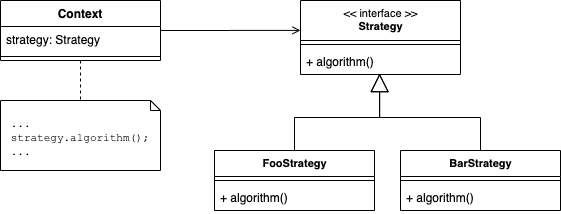
The context isn’t responsible for selecting an appropriate algorithm for the job. It works with all strategies through the same generic interface, which only exposes a single method for triggering the algorithm encapsulated within the selected strategy. The problem with the above approach is that the code using the SomeClass’s object, suddenly now becomes dependent on the concrete implementation of SomeClass. There’s nothing wrong with using new to create objects but it comes with the baggage of tightly coupling our code to the concrete implementation class, which can occasionally be problematic.
Factory Method Design Pattern
Furthermore, a layered pattern is ideal for applications that require strict standards of testability. Each layer has a specific role within the application that is connected to the roles of other layers. For instance, a presentation layer, also called the UL layer, would handle all the UI and browser communication logic while a business logic layer would execute certain business requests. In Java, the keyword synchronized is used on methods or objects to implement thread safety, so that only one thread will access a particular resource at one time. The class instantiation is put within a synchronized block so that the method can only be accessed by one client at a given time.
Can design patterns be used in functional programming?
While from a business perspective the app was a success, the technical part caused you many headaches. Each time you added a new routing algorithm, the main class of the navigator doubled in size. Finally, the Observer pattern is showcased through a simple Subject-Observer model. In this model, the Subject (Data) maintains a list of its dependents, called Observers, and notifies them of any changes to its state.
Types of Software Design Patterns
You could even make sub-classes to hold specific methods and properties you need that you can't put in your base class. It uses certain conventions and you can expect a specific kind of behavior from it. These patterns were made up of many developers' experiences so they are really like different sets of best practices. The layered architecture pattern is the most common among developers.
Use Cases of Circuit Breaker Pattern
A disadvantage, however, is that the server is expensive to purchase and manage. The controller handles the input from the user and mediates between the model and the view. It listens to external inputs from the view or from a user and creates appropriate outputs.

The nodes are connected with others if there’s a road between the real objects that they represent. Under the hood, each node type is represented by its own class, while each specific node is an object. Since we’ve flipped the makeValidator function to make more suitable for currying, our compose chain receives the schema that we need to validate against first. We first break the schema into key-value Pairs, and pass the value of each property to it’s corresponding validation function. In case the function fails, we use bimap to map on the error, add some more information to it, and return it as a singleton Array. Traverse will then concat all the errors if they exist, or return the original object if it’s valid.
Software Design Patterns Tutorial
Darken takes a multiplier, a color and returns a darker shade of that color. Use the pattern when your class has a massive conditional statement that switches between different variants of the same algorithm. In this example, the context uses multiple strategies to execute various arithmetic operations. One day you decided to create a navigation app for casual travelers. The app was centered around a beautiful map which helped users quickly orient themselves in any city. If you have two applications, with one spitting out output as XML with the other requiring JSON input, then you’ll need an adapter between the two to make them work seamlessly.
Step 2: Choose a Circuit Breaker Library
This phase involves creating the necessary classes and interfaces and establishing the relationships the selected pattern specifies. Accompanying the implementation with proper documentation and code comments is crucial to ensuring clarity for future maintainers. The Visitor pattern suggests that you place the new behavior into a separate class called visitor, instead of trying to integrate it into existing classes. The original object that had to perform the behavior is now passed to one of the visitor’s methods as an argument, providing the method access to all necessary data contained within the object. Visitor is a behavioral design pattern that lets you separate algorithms from the objects on which they operate. You can easily implement the strategy pattern by creating separate classes for algorithms.
There are 7 structural design patterns defined in the Gangs of Four design patterns book. There are 5 design patterns in the creational design patterns category. P.S. While I update the project constantly, you can already find tons of info on refactoring and design patterns right here on the website. As you can see from above, just as the concrete coffee blends are subclasses of the beverage abstract class, the AddOn abstract class also inherits its methods from it. The add-ons, that are its subclasses, in turn inherit any new methods to add functionality to the base object when needed. It allows us to dynamically add functionality and behavior to an object without affecting the behavior of other existing objects within the same class.
It uses a technique called Double Dispatch, which helps to execute the proper method on an object without cumbersome conditionals. Instead of letting the client select a proper version of the method to call, how about we delegate this choice to objects we’re passing to the visitor as an argument? Since the objects know their own classes, they’ll be able to pick a proper method on the visitor less awkwardly.
The 7 Software Architecture Books Experienced Developers Need to Read - hackernoon.com
The 7 Software Architecture Books Experienced Developers Need to Read.
Posted: Thu, 03 Aug 2023 07:00:00 GMT [source]
Here’s another example that tries to create a best-effort formatter when provided different types of values. Using the power of First, let’s try creating a function that attempts to get the first available property on an object. The of is a completely dumb constructor, and lifts any value that you give it into our data type.
If we declare any variables within the dependency array, the function will execute only when those variables change. Same as any traversing algorithm we code to iterate through more complex data structures like trees or graphs. In this way, if no token or a wrong token is provided, the middleware will return the corresponding error response. If a valid token is provided, the middleware will call the next() function and the endpoint function will get executed next.
Further, the MVC allows logical grouping of related outputs to generate numerous views from the model. However, one drawback is that navigating the framework could be complex as it introduces several layers of abstraction. It can access data in the model but cannot understand the data, nor does it understand how the data can be manipulated.
A Semigroup is similar to a Monoid and it defines a concat method — but unlike the Monoid, it doesn’t require the presence of the empty method. We’re also introducing the transformation function maybeToResult below, that’ll help us interoperate between Maybe and Result. Sequence helps swap the inner type with the outer type while performing a certain effect, given that the inner type is an Applicative.


No comments:
Post a Comment